SMARTERehab - Lower Quadrant: Movement Analysis, Sub-classification & Neuromuscular Retraining
Hip and lower limb motor control: movement analysis and neuromuscular retraining. Sub-classification approach distinguishing hip, SIJ and lumbar sources, with kinetic chain sequencing and force closure assessment. Taught in English by Sean Gibbons (SMARTERehab). Cours donné en anglais.
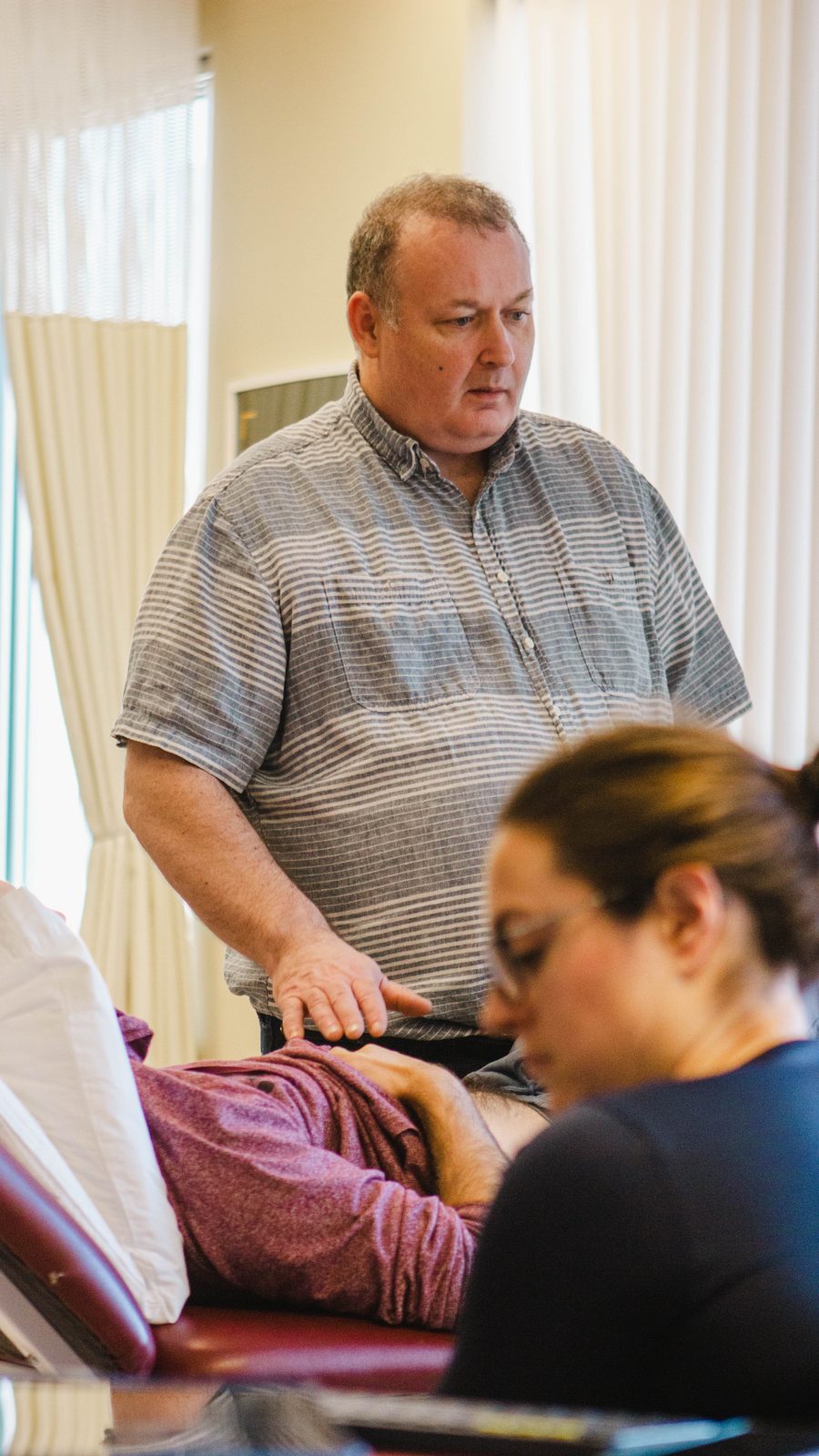
Instructeur

Offert en cours privé
Cours donné par Sean Gibbons (SMARTERehab). Cours donné en anglais.
Description du cours
Pain free gait and lower limb function is complex and something we would like to take for granted. But when there is a motor control deficit somewhere in the kinetic chain symptoms can develop insidiously or with a small trauma and recurrent injuries can become a problem.
This course covers the analysis of movement of the lower limb. Normal gait will be discussed from the lumbo-pelvic region down to the toes and the injury consequences of abnormal restrictions along the kinetic chain will be analysed. Hip instability and impingement is detailed along with the relationship to lumbo-pelvic stability. Lower limb movement and alignment is assessed with relation to functional and structural restrictions that need to be compensated for to maintain function. The diagnosis of an abnormal movement pattern allows the development of a specific retraining program to regain functional stability of the hip and lower limb. The exercise progressions are described and strategies for the integration into function are discussed with participant examples and case studies.
Overuse injuries, and common lower limb diagnoses are described within the framework of analysing and correcting movement. Proprioception and sensory motor function for the lower limb is discussed. The requirements for orthotics, the need for proximal stability for lower limb stability are also described. The evidence for neuromuscular exercise for lower limb rehabilitation is discussed.
The Functional Performance Evaluation© will be used to design individual and functional exercise programs. This is an evidence based course.
Objectifs spécifiques du cours
- Identify restrictions in the lower limb and the resultant compensations.
- Make a clinical diagnosis of an abnormal movement pattern and relate it to tissue pathology in the lower quadrant.
- Use the movement pattern diagnosis as a clinical reasoning tool to help guide manual therapy and other techniques.
- Problem solve to prescribe appropriate exercises that relate to controlling the direction of strain and to regain muscle balance.
- Understand the importance of proximal stability and sensory motor function for lower extremity function.
Public cible
Physiotherapists. Prerequisite: Sub-Classification course (SMARTERehab). Often paired with the Lumbar Spine and SIJ courses.
Nous offrons des cours privés
Inscrivez-vous à un cours et transformez votre carrière en physiothérapie dès aujourd'hui.



Nos formateurs
Des formateurs passionnés qui guident chaque étudiant vers l'excellence clinique.

Sean Gibbons
Physiotherapist, research director and lecturer at SMARTERehab, internationally recognized for turning complex musculoskeletal pain into bite-size, evidence-based interventions.
Restez à jour avec les tendances et techniques de l’industrie
Rejoignez les professionnels qui transforment leur pratique clinique chaque jour.

FAQs
Trouvez les réponses aux questions qui vous préoccupent.
Prêt à transformer votre pratique?
Inscrivez-vous à un cours et transformez votre carrière en physiothérapie.