SMARTERehab - Thoracic Spine & Breathing Retraining: Movement Analysis, Sub-classification & Neuromuscular Retraining
La colonne thoracique te donne du fil à retordre? Apprends à sous-classer les déficits de contrôle du mouvement pour guider ta thérapie manuelle et ta rééducation.
Instructeur

Offert en cours privé
Cours donné par Sean Gibbons (SMARTERehab). Cours donné en anglais.
Description du cours
Mid back pain can be caused by trauma but frequently it is insidious, recurrent and an ongoing problem for many people. There are sub-groups of people with low back pain that have: poor control of movement in the thoracic spine; problems with control of segmental translation, and respiratory deficits. In some people, the mid thoracic spine habitually tends to move more into flexion and the upper thoracic spine tends to move more into extension during functional movements. This is often combined with rotation. The muscles that produce and control these movements exhibit altered patterns. It is commonly the uncontrolled movements and translation that continue to provoke the client's pathology or sensitise overloaded tissues.
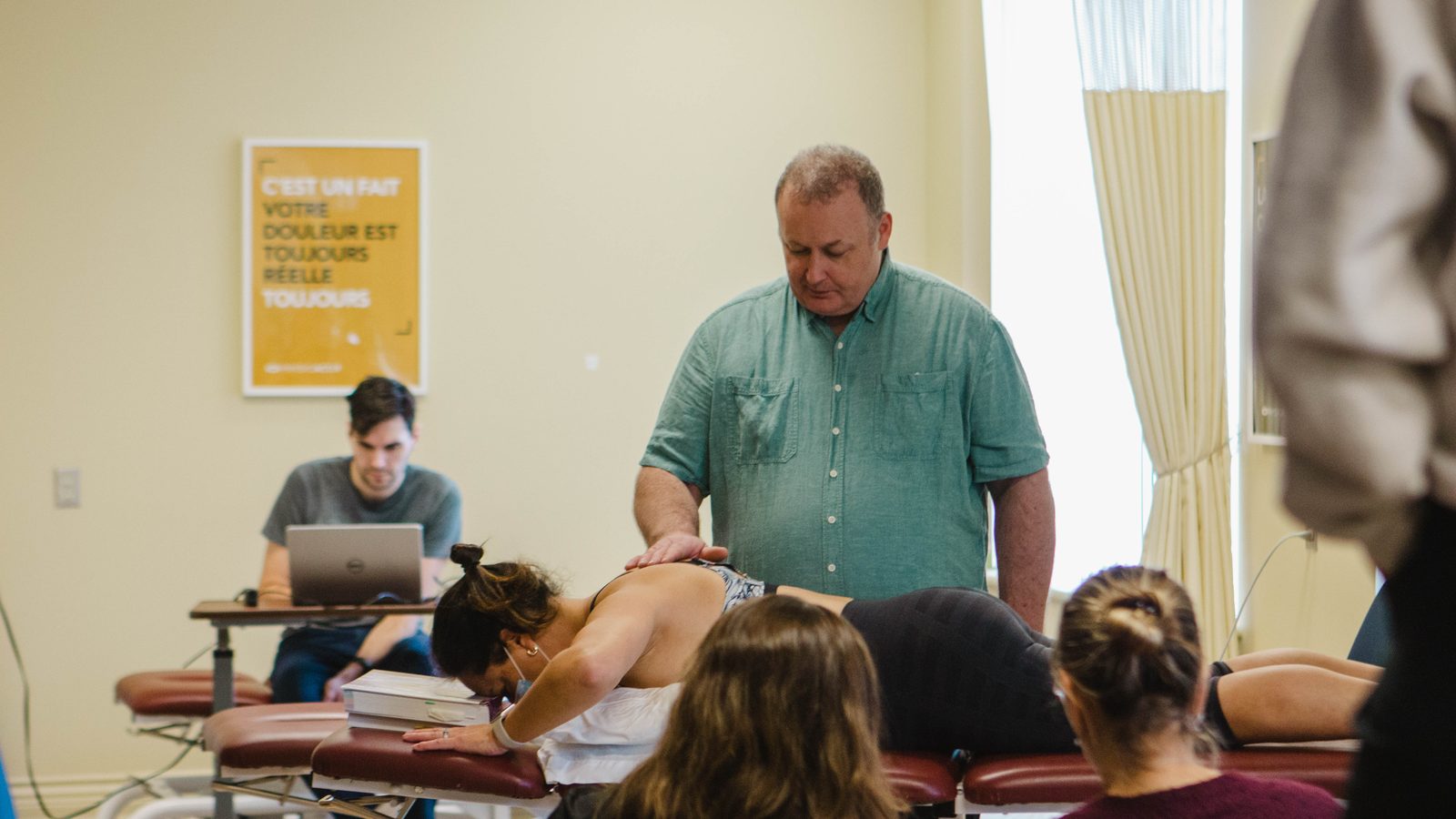
This course will provide participants with skills in analysing movement and muscle activation, and diagnosing motor control deficits in the thoracic region. These will relate to functional movements that provoke the patient's symptoms. Normal respiratory function is identified and assessed in relation to function and sensory motor control. The effect of cervical and scapular motor deficits on thoracic stability and respiratory function are also covered. Motor control retraining strategies will be introduced using a comprehensive and evidence based clinical reasoning process. Retraining will focus on: mechanisms behind the uncontrolled movement, proprioceptive awareness of the thoracic neutral position, control of movement in the thoracic region, activation of the appropriate muscles to control translation, position and movements, and integration of this into function.
Objectifs spécifiques du cours
- Apply a clinical prediction rule to know who will need and respond to specific motor control stability exercises for the Thoracic Spine.
- Diagnose movement pattern control deficits of the thoracic spine.
- Understand the different mechanisms behind thoracic movement pattern control deficits and altered breathing.
- Understand the inter-relationship between scapular, cervical, and thoracic movement pattern control with respiratory function.
- Identify normal breathing, assess and rehabilitate the respiratory system.
- Identify suitable starting points and appropriate progressions of motor control stability exercises.
- Progress thoracic movement pattern control into function using Kinetic chain sequencing and the Functional Performance Evaluation.
- Integrate the treatment of motor control stability training with other techniques into clinical practice.
Public cible
Physiothérapeutes.
Nous offrons des cours privés
Inscrivez-vous à un cours et transformez votre carrière en physiothérapie dès aujourd'hui.



Nos formateurs
Des formateurs passionnés qui guident chaque étudiant vers l'excellence clinique.

Sean Gibbons
Physiotherapist, research director and lecturer at SMARTERehab, internationally recognized for turning complex musculoskeletal pain into bite-size, evidence-based interventions.
Restez à jour avec les tendances et techniques de l’industrie
Rejoignez les professionnels qui transforment leur pratique clinique chaque jour.

FAQs
Trouvez les réponses aux questions qui vous préoccupent.
Prêt à transformer votre pratique?
Inscrivez-vous à un cours et transformez votre carrière en physiothérapie.